Key takeaways
- Level 1 Complex Operations replaces the SFOC process for most BVLOS work in Alberta.
- Advanced RPAS pilots now need recurrent training every 24 months, plus mandatory Remote ID from November 1, 2026.
- Minimum commercial liability insurance rose from $1M to $2M as of January 1, 2026.
Transport Canada published a substantial 2026 update to the Canadian Aviation Regulations (CARs) Part IX governing Remotely Piloted Aircraft Systems (RPAS). For Alberta commercial drone operators — surveyors, inspectors, mapping crews — the changes affect everything from pilot certification timelines to Beyond Visual Line of Sight (BVLOS) approvals.
Here is what matters for commercial work in 2026.
1. Level 1 Complex Operations — the new BVLOS pathway
The biggest practical change is the introduction of Level 1 Complex Operations, replacing the Special Flight Operations Certificate (SFOC) process for most BVLOS work. Operators flying medium-risk BVLOS missions — pipeline patrol, transmission line inspection, large-scale solar farm thermal sweeps — can now apply under a structured framework instead of bespoke SFOC paperwork.
Practically, that means:
- Faster authorization turnaround (Transport Canada targets 30 days vs. the 60-90 day SFOC norm)
- A standardized risk-assessment template using the Specific Operations Risk Assessment (SORA) v2.5 framework
- Mandatory Level 1 Complex Operations pilot certification (an upgrade over the current Advanced RPAS certificate)
2. Advanced RPAS pilots — recurrent training requirement
All Advanced RPAS pilots now require recurrent training every 24 months, including a written knowledge review and a flight review with a qualified instructor. The first cohort with 2024-issued certificates must complete recurrent training before September 2026.
3. Micro-drones under 250 g — clarified scope
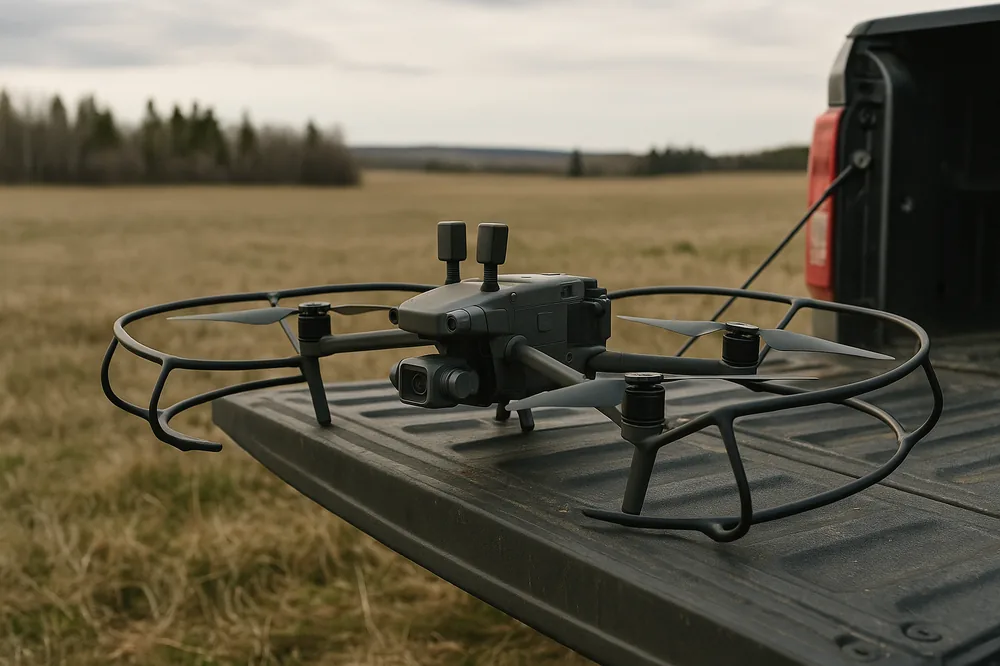
The previous "no certification required" rule for sub-250 g aircraft applies only to recreational use. Commercial use of micro-drones — including the DJI Mini series for photography or inspection — now requires at minimum a Basic RPAS certificate and registration of the aircraft, even if it weighs less than 250 g.
4. Mandatory Remote ID
Starting November 1, 2026, all RPAS over 250 g operating in Canadian airspace must broadcast a Remote ID signal during flight. Most current-generation DJI and Skydio aircraft support Remote ID via firmware update; older aircraft may require a hardware module. UAV Imaging's fleet (Matrice 300 RTK, Mavic 3 Enterprise, Elios 2) is Remote ID compliant via firmware.
5. Insurance threshold raised
The minimum liability insurance for commercial drone work increased from $1M to $2M effective January 1, 2026. UAV Imaging carries $5M aviation liability — well above the new floor.
What this means for Alberta operators
For most Alberta-based commercial operators flying within Visual Line of Sight (VLOS), the day-to-day impact is moderate: recurrent training, Remote ID firmware updates, and the higher insurance floor.
For operators pursuing BVLOS work — long pipeline runs, methane survey grids, multi-section ag work — the Level 1 Complex Operations pathway is a meaningful win. The structured framework replaces months of SFOC back-and-forth.
How UAV Imaging is positioned
UAV Imaging holds Advanced RPAS certifications across all pilots, $5M liability insurance, Remote ID-compliant aircraft, and an active Level 1 Complex Operations application for BVLOS pipeline and transmission inspections in northern Alberta.
Clients receive compliance documentation, Site-Specific Operations Risk Assessments (SORAs) where required, and crew coordination records as part of every project deliverable.