Methane Detection Case Study: Federation of Alberta Gas Co-ops
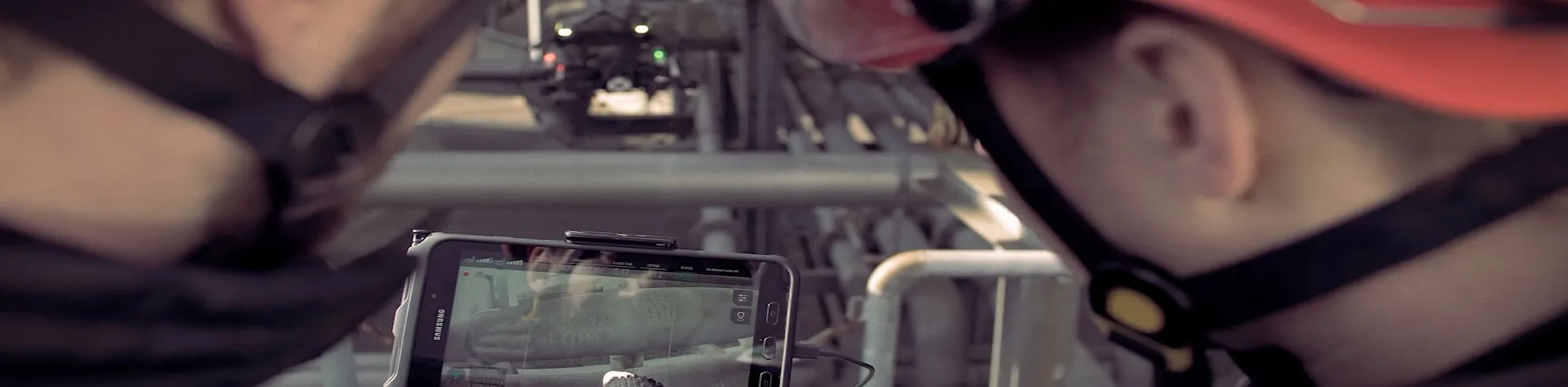
UAV Imaging demonstrated drone-mounted methane detection technology at the Federation of Alberta Gas Co-ops tradeshow in November 2023, showcasing how aerial-mounted sensors compare against traditional ground crew leak surveys for natural gas distribution networks.
The challenge
Alberta's rural gas co-ops operate thousands of kilometres of distribution lines serving farms, hamlets, and acreages. Annual leak survey programs traditionally rely on ground crews walking the line with handheld methane sensors — labour-intensive, slow, and limited by terrain access.
The Federation of Alberta Gas Co-ops invited UAV Imaging to demonstrate whether drone-mounted methane detection could meet the same regulatory leak-survey requirements at a fraction of the cost and time.
The setup
- Aircraft: DJI Matrice 300 RTK
- Sensor: Pergam Falcon laser-based methane detector (ppm-m sensitivity)
- Test site: Controlled methane release at known concentrations between 50 and 5000 ppm-m
- Flight pattern: Linear corridor at 30 m AGL, 5 m/s ground speed
Results
The drone-mounted sensor positively identified the methane plume at all tested concentrations, including the 50 ppm-m baseline. Survey throughput averaged roughly 8-12 km per flight hour, compared with 1-2 km per crew-day for a two-person ground team.
Estimated cost-per-kilometre reduction for a typical rural distribution leak survey: 60-75% versus ground-crew baseline.
Operational benefits beyond cost
- Access — drone surveys cover terrain that's impassable on foot (creeks, fence lines, soft ground in spring)
- Safety — no crews walking ditches near active roads or hazardous-atmosphere areas
- Documentation — every flight produces geo-tagged sensor data with timestamped survey track for regulator audits
- Scheduling — single pilot + observer crew can cover what previously needed three two-person ground teams
Regulatory alignment
Aerial methane survey results are accepted under the Alberta Energy Regulator's Directive 060 fugitive emissions reporting framework when paired with a documented Method 21 (or equivalent) walkdown of any positive detections.
Next steps
UAV Imaging now offers aerial methane survey programs for Alberta gas co-ops, midstream operators, and oilfield gathering systems. Programs typically include annual or semi-annual surveys, regulator-ready reporting, and ground-crew follow-up coordination for confirmed detections.